Showing posts with label Professional relationships. Show all posts

10 May 2022

Bias was designed in, let's design it out.

I was inspired this morning in a workshop entitled "Addressing bias in the workplace – A kōrero with Hiraina Tangiora" with three heavyweight mana wāhine. I have noted my key takeaways from each speaker below.

Kathie Irwin, MNZM, PHD, MInstD - Kathie Irwin & Associates, Former Director Māori Development at Te Ara Ahunga Ora Retirement Commission

  • Unapologetically Māori
  • Bias was designed in, we can design it out.
  • Say no to racism, say no to bigotry, say no to microaggressions - call it out! 
  • Have fun in your pathway, and make it lighter!
  • Advice: Do your homework, do your due diligence, and back yourself!

Māhina Melbourne - Group Manager, Ministry of Education
  • For none, but ourselves can set ourselves free - Bob Marley
  • Build strength within myself, create boundaries, well-being - tinana, wairua, whanau, hinengaro.
  • Who inspires you? who are the people that make you feel like you?
  • Kia tū kahikatea - our strength comes from standing as a collective.
  • Bias elimination is an inter-generational journey.
  • Whanaungatanga is your power - Atawhai Tibble
  • Advice: Use your network
Professor Rawinia Higgins FRSNZ - Deputy Vice-Chancellor at Te Herenga Waka - Victoria University of Wellington
  • There is bias (cultural, sexism, ageism, etc), and there are microaggressions - so what are we going to do about it?
  • Bias is about power, and how do we gain that power? and why at the expense of everyone else?
  • Equity is not the same as Tangata Tiriti
  • Advice: Work collectively

05 November 2021

Presence in coaching

This evening I had the great pleasure of attending the following workshop with Tunde Erdos and Maureen Owen.  

Integrative Coaching Presence: A needs exchange through somatic responsiveness in dialogue.

Presence is defined as the capacity to spontaneously respond to others’ needs at any given moment. This capacity shows in your body before you even utter a word. The body comes before the brain.

We all tend to have a default setting about money, love, work, and presence, which limits our potential to have healthy relationships. While we think we are present, we may have too much or not enough of it. The result is our presence-less-ness as we miss seeing what is relevant in our interactions at any given moment.

In this workshop, we will explore two obstacles to a presence in coaching as a growth intervention. We will reflect on:
– the consequences of our presence-less-ness in our default setting
– our presence-ness integrating the I, Other, and We in coaching

The workshop is based on a recently conducted large-scale international coaching research that investigated 184 coach-client pairs.


So what?

Initially, I was slightly overwhelmed by the content, in that I wasn't quite sure what was going on. It seemed like a bit of an airy-fairy session. I'm so glad I stuck it out because further into the workshop, I was pleasantly surprised by how much sense Tunde was making. Perhaps the stand-out statement for me was that 'everyone has a need'. Being present is about the 'I' too, in that you have to understand what you are wanting from the coaching relationship e.g. I want to work on my questions, I want to get through the format etc. Tunde shared an example that resonated with me so much, when coaching a client the story sounded familiar to one she had heard previously she made a connection and remembered a powerful question that was asked in the session, so she used it (her words were 'dumped' it) in the coaching conversation she was having and the client found it overwhelming. Might presence be more about being in tune with your client in the coaching dance?


26 September 2020

Generating knowledge – methods or techniques for research

Topic
How we listen to others influences how we lead

Research aim
To critically examine leaders’ experiences of listening to others and how this influences their leadership practice.

Thinking about the conceptual framework and topic of your study, what might count as knowledge generation in a study of this type? 

I've been reading lots on this topic and really trying to hone in on the conceptual framework I might use in my research design. I was challenged by my kaiako in my last assignment to consider embedding my work in a "Māori and Pacific conceptual framework". I had considered this but found difficulty in locking in on a particular framework that suited my purpose. I have had fun lately exploring a range of models with tauira in my Year 3 class where they are exploring Kakala Model, Ula Model, Te Whare Tapa Whā, Tapasā among others so I was keen to delve further into a framework that I could use and generate knowledge through. I have looked into the Tivaevae Model (Ava & Rubie-davies, 2011; Futter-Puati & Maua-Hodges, 2019; Tanner, 2018; Te Ava & Page, 2018) and Tūranga Framework (Ava & Rubie-davies, 2011; Enosa et al., 2019; Mafile’o et al., 2019; NZEI Te Riu Roa, 2015). I am really excited about the possibility of using a Cook Islands framework

I read extensively around Pacific research methodologies (’Otunuku et al., 2014; Chu et al., 2013; Mauigoa-Ekene et al., 2013; Naepi, 2015; Southwick et al., 2017) and have appreciated the clarity provided by Judy McFall-McCaffery who states “The word Pasifika is increasingly used in Aotearoa New Zealand to include all people of Cook Island, Niue, Tokelau, Samoa, Tonga, Fiji and other Pacific ethnicities who live in New Zealand. It is important to be aware that the “Pacific” is not homogeneous, but represents a diverse and distinct range of cultures and languages. Pacific ethnic groups speak different languages and have different cultural practices and customs” (McFall-McCaffery, 2010, p. 2). As Mafile’o, Mitaera & Mila (2019) point out “there have been a plethora of models, metaphors and cultural modes of delivery which are all attempting to do the same thing…they are trying to articulate our Pacific point of difference” (p. 24). I have been exploring a range of pacific research methodologies but am really convinced that I want to bring to light a Cook Island perspective. It is important to note at this point that "Cook Islands culture, ākono’anga Māori, is neither static nor universal; there is no one Cook Islands cultural perspective or practice" (Mafile’o et al., 2019, p. 26)

So with that in mind, I am keen to use the Turanga Māori framework developed by Dr. Jean Mitaera as part of her work within the Nga Vaka o Kaiaga Tau (2020) space.  The model has been shared in multiple spaces (Mafile’o et al., 2019; Mitaera, 2019a, 2019b) and is framed in the following way:

The three elements of the framework are: (1) Akono’anga Māori, Cook Islands culture; (2) No teia tuatau, of this time; and (3) Tā’anga’anga’ia, put to practice.

(1) Akono’anga Māori, Cook Islands culture;
Turanga - position, place and status
Pirianga - to close, hold tight, to work, relationships
Akaueanga - the duties of care
Ngakau aro’a - willingness and conviction of the heart

(2) No teia tuatau, of this time
No teia tuatau, of this time, emphasises the importance of being relevant and realistic given the social, economic, cultural and environmental contexts that people live in today. When engaging with Cook Islands families, it is important to: (i) komakoma marie, let our conversation be unhurried, be in the now; and (ii) kia maru to korua komakoma’anga, let your conversations be calm and measured.

3. Tā’anga’anga’ia, put to practice
Transformation occurs when akono’anga Māori, being relevant to the time and environment, are put into practice. On their own they are simply cultural concepts, isolated in space and without purpose. Turanga Māori is one conceptual framework. Irrespective of the model or framework a practitioner chooses, the model or framework is but a tool to inform and guide practice. Turanga Māori’s purpose is to be relevant and effective for Cook Islands Maori client(s) and practitioners. That practice should be informed by the culture of the people we serve.


Would appropriate answers to your research questions be found in the information held by other people, observing a situation or practice, encoded in documents or artefacts, through theorising or another creative process, through looking in a new way at a source of secondary data, reading other research studies, something else? Or a combination of some of these? Justify your answer. 

I have yet to finalise my research questions, that is a priority of mine this weekend. However, I have given lots of thought to how I might generate knowledge for my research aim, as my focus is on listening, so I believe that I would need to collect data by being an insight generator or provacateur (Alvesson, 2019)

Identify 3 - 4 different ways other people have generated knowledge in their research that might be applicable or useful in your study. Explain why they are potentially useful and highlight any adaptations that would need to be made. 

* Metaphors
* Narrative
* Critical reflection

Tivaevae Model

Powell, E. E. N. (2013). Stitching to the back-bone: A Cook Islands literary tivaivai. ResearchSpace@ Auckland.

Te Ava, A. (2011). Mou piriia te kōrero ‘ā to ‘ui tūpuna, akaoraoraia: Culturally responsive pedagogy for Cook Island secondary schools physical education. ResearchSpace@ Auckland.

George, K. (2010). Evolving patterns of identity: a visual response to observations of Cook Islands’ women and their adornment.

Ava, A. Te. (n.d.). Initiating a Culturally Responsive Pedagogy : Historical Shifts in Health and Physical Education in the Cook Islands School of Education , Faculty of Law , Education , Business & Arts , Charles Darwin. 1–10.

Thompson, S., Mcdonald, F., Talaki, M., Taumoepeau, V., & Te Ava, a. (2009). Training manual for teaching working with pacific students: Engaging pacific learners. 1–38.

Ward, A. (2011). Weaving educational threads, Weaving educational practice. Kairaranga, 12(1), 43–50. https://files.eric.ed.gov/fulltext/EJ935477.pdf

Tamata, S. A. (n.d.). Framing Cook Islands Indigenous Epistemologies.

Carter, S., Laurs, D., Chant, L., & Wolfgramm-Foliaki, E. (2018). Indigenous knowledges and supervision: Changing the lens. Innovations in Education and Teaching International, 55(3), 384–393. https://doi.org/10.1080/14703297.2017.1403941


Turanga Framework

Southwick, M., Scott, W., Mitaera, J., Nimarota, T., & Falepau, L. (2017). RESEARCH REPORT | Articulating a Pedagogy of Success for Pacific Students in Tertiary Education. www.akoaotearoa.ac.nz

NZEI Te Riu Roa. (2015). Dr Jean Mitaera - The Pasifika child - YouTube. https://www.youtube.com/watch?reload=9&v=SNaSCp0DI1s

Mitaera, J. (2019, September 4). The value of unpaid work – a Cook Islands view | Ministry for Women. Ministry for Women: Minitatanga Mō Ngā Wāhine. https://women.govt.nz/node/1460/jean-mitaera

Mitaera, J. (2019, August 30). Tūranga Framework for Wellbeing. Werry Workforce:Whāraurau 2019 Leveki National Pacific Fono. https://vimeo.com/360156072

Newport, C. (2019). Vaka Moana as Policy Space: Navigating the Cook Islands Case of Climate Change Mobility. February 2019.

Tamata, S. A. (n.d.). Framing Cook Islands Indigenous Epistemologies.

Mafile’o, T., Mitaera, J., & Mila, K. (2019). Pacific-indigenous social work theories and models. In Pacific Social Work: Navigating Practice, Policy and Research (Issue 2019, pp. 22–34). https://doi.org/10.4324/9781315144252-3

Ministry of Social Development. (2012). Turanga Māori: a Cook Islands Conceptual Framework transforming family violence - restoring wellbeing (Issue March). http://www.pasefikaproud.co.nz/assets/Resources-for-download/PasefikaProudResource-Nga-Vaka-o-Kaiga-Tapu-Pacific-Framework-Cook-Islands.pdf%0Ahttp://www.pasefikaproud.co.nz/

Enosa, R., Tino Pereira, F., Taufa, S., Clifford-Lidstone, G., & Filimoehala-Burling, A. (2019). Nga Vaka o Kaiga Tapu. Aotearoa New Zealand Social Work, 30(4), 13–18. https://doi.org/10.11157/anzswj-vol30iss4id607

Mitaera, J., Paasi, L., Filipo, H., & Pasefika Proud. (2016). Literature search of Cook Islands cultural concepts to inform family violence interventions and practice: Research Summary. 1–2. https://www.msd.govt.nz/documents/about-msd-and-our-work/publications-resources/research/pacific/msd-cook-island-report-18-v4.pdf%0Ahttps://www.msd.govt.nz/documents/about-msd-and-our-work/publications-resources/research/pacific/msd-cook-island-summary-v3

Metaphors

Cameron, L., & Low, G. (2011). Metaphor and the Social World: Introduction to the first issue. Metaphor and the Social World, 1(1), 1–5. https://doi.org/10.1075/msw.1.1.01cam

Mills, A., Durepos, G., & Wiebe, E. (2012). Encyclopedia of Case Study Research. Encyclopedia of Case Study Research, 553–555. https://doi.org/10.4135/9781412957397

Alvesson, M. (2014). A Metaphor Approach. Interpreting Interviews, 62–74. https://doi.org/10.4135/9781446268353.n4

Alvesson, M. (2019). Metaphorizing the Research Process. 486–505.

Dragon, W., & Duck, S. (2005). Understanding research in personal relationships: A text with readings. Sage.

Danisman, S. A. (2020). Interviewing and Qualitative Content Analysis for Root Metaphors: A Case of Bad News Management. Interviewing and Qualitative Content Analysis for Root Metaphors: A Case of Bad News Management. https://doi.org/10.4135/9781529713398

Ignatow, B. G., & Mihalcea, R. (2020). Metaphor Analysis In : Text Mining : A Guidebook for the Social Sciences.

Thorpe, R., & Holt, R. (2011). The SAGE Dictionary of Qualitative Management Research. The SAGE Dictionary of Qualitative Management Research. https://doi.org/10.4135/9780857020109

Coghlan, D., & Brydon-Miller, M. (2014). The SAGE Encyclopedia of Action Research. The SAGE Encyclopedia of Action Research, 535–536. https://doi.org/10.4135/9781446294406

Kumar, M., Pattanayak, S., & Pattanayak, S. (2019). Metaphors We Live By: Appreciating the Place of Language in Indigenous Research. Positioning Research: Shifting Paradigms, Interdisciplinarity and Indigeneity, 144–162. https://doi.org/10.4135/9789353282509.n8

Lewis-Beck, M., Bryman, A., & Futing Liao, T. (2012). The SAGE Encyclopedia of Social Science Research Methods. The SAGE Encyclopedia of Social Science Research Methods, 640–641. https://doi.org/10.4135/9781412950589

Cornelissen, J. P., Oswick, C., Christensen, L. T., & Phillips, N. (2008). Metaphor in organizational research: context, modalities and implications for research - Introduction. Organization Studies, 29(1), 7–22. https://doi.org/10.1177/0170840607086634

Alvesson, M. (2003). Beyond Neopositivists, Romantics, and Localists: A Reflexive Approach to Interviews in Organizational Research. The Academy of Management Review, 28(1), 13. https://doi.org/10.2307/30040687

Manesh, R. (2017). Mistakes were made (by me). JAMA Internal Medicine, 177(10), 1422–1423. https://doi.org/10.1001/jamainternmed.2017.3781

Pauwels, L., Mannay, D., & Pauwels, L. (2020). An Integrated Conceptual and Methodological Framework for the Visual Study of Culture and Society. In The SAGE Handbook of Visual Research Methods. https://doi.org/10.4135/9781526417015.n2

Narrative

Dwyer, R., Davis, I., & Emerald, E. (2016). Narrative research in practice: Stories from the field. Narrative Research in Practice: Stories from the Field, 1–245. https://doi.org/10.1007/978-981-10-1579-3

Elliott, J. (2012). Gathering narrative data. In S. Delamont (Ed.), Handbook of Qualitative Research in Education (pp. 281–298). Edward Elgar Publishing Limited. http://ebookcentral.proquest.com/lib/aut/detail.action?docID=866984

Spector-Mersel, G. (2010). Narrative research: Time for a paradigm. Narrative Inquiry, 20(1), 204–224. https://doi.org/10.1075/ni.20.1.10spe

Fuluifaga, A. R. (n.d.). O FEOSOFA’IGA O LE VĀ: SAMOAN WOMEN NEGOTIATING VĀ RELATIONS IN AND AROUND AN ART CENTRE IN RURAL SAMOA.

Atkinson, P., & Delamont, S. (2007). Rescuing narrative from qualitative research. 1, 195–204. https://doi.org/10.1075/bct.6.20atk

Andrews, M., Squire, C., Tamboukou, M., Squire, C., Andrews, M., & Tamboukou, M. (2019). Introduction: What Is Narrative Research? Doing Narrative Research, 1–21. https://doi.org/10.4135/9780857024992.d2

Mollen, A., & Mollen, A. (2020). Research design and method. Digital Spaces of Civic Communication, 67–90. https://doi.org/10.1007/978-3-658-27515-0_5

Morley, C. (2014). Using Critical Reflection to Research Possibilities for Change. British Journal of Social Work, 44(6), 1419–1435. https://doi.org/10.1093/bjsw/bct004

Hickson, H. (2016). Becoming a critical narrativist: Using critical reflection and narrative inquiry as research methodology. Qualitative Social Work, 15(3), 380–391. https://doi.org/10.1177/1473325015617344

Critical reflection

Tripp, D. (2012). Problematic and practice. In D. Tripp (Ed.), Critical incidents in teaching: Developing professional judgement (Classic ed, pp. 12–23). Routledge. https://ebookcentral.proquest.com/lib/aut/reader.action?docID=958710&amp

Morley, C. (2013). Critical reflection as a research methodology. Knowing Differently: Arts-Based and Collaborative Research Methods, January 2008, 265–280.

Tripp, D. (2012). Interpretation: creating critical incidents. In D. Tripp (Ed.), Critical incidents in teaching: Developing professional judgement (Classic ed, pp. 12–23). Routledge. https://ebookcentral.proquest.com/lib/aut/reader.action?docID=958710&amp

Delamont, S. (2009). The only honest thing: autoethnography, reflexivity and small crises in fieldwork. Ethnography and Education, 4(1), 51–63. https://doi.org/10.1080/17457820802703507

Larsson, P. (2010). Reflexive methodology: new vistas for qualitative research (second edition), by Mats Alvesson and Kaj Sköldberg. European Journal of Psychotherapy & Counselling, 12(1), 89–91. https://doi.org/10.1080/13642531003746857

Alvesson, M. (1996). Leadership studies: From procedure and abstraction to reflexivity and situation. Leadership Quarterly, 7(4), 455–485. https://doi.org/10.1016/S1048-9843(96)90002-8

Watts, L. (2019). Re fl ective Practice , Re fl exivity , and Critical Re fl ection in Social Work Education in Australia. 72(1), 8–20.

Fook, J., & Gardner, F. (2007). The critical reflection model and process. In J. Fook & F. Gardner (Eds.), Practising critical reflection : a resource handbook. (pp. 43–63). Open University Press. https://ezproxy.aut.ac.nz/login?url=https://search.ebscohost.com/login.aspx?direct=true&db=cat05020a&AN=aut.b26169447&site=eds-live

Bozalek, V., & Zembylas, M. (2017). Diffraction or reflection? Sketching the contours of two methodologies in educational research. International Journal of Qualitative Studies in Education, 30(2), 111–127. https://doi.org/10.1080/09518398.2016.1201166

Morley, C. (2012). Some methodological and ethical tensions in using critical reflection as a research methodology. In J. Fook & F. Gardner (Eds.), Critical Reflection in Context : Applications in Health and Social Care (pp. 165–178). Taylor & Francis Group. http://ebookcentral.proquest.com/lib/aut/detail.action?docID=1039238

Hewson, S. (2007). “Researcher Know Thyself”. Critical Reflection on a Teacher’s Research Journey: If I Had Known Then ... TESOL in Context, 16(2), 25.

Morley, C. (2014). Using Critical Reflection to Research Possibilities for Change. British Journal of Social Work, 44(6), 1419–1435. https://doi.org/10.1093/bjsw/bct004

Murray, L., & Nash, M. (2017). The Challenges of Participant Photography: A Critical Reflection on Methodology and Ethics in Two Cultural Contexts. Qualitative Health Research, 27(6), 923–937. https://doi.org/10.1177/1049732316668819

Fook, J. (2009). Developing an integrated framework for critical reflection: from practice, to theory, towards research. University of Southampton.

Hickson, H. (2016). Becoming a critical narrativist: Using critical reflection and narrative inquiry as research methodology. Qualitative Social Work, 15(3), 380–391. https://doi.org/10.1177/1473325015617344

21 September 2020

Whānau transformation through education

My tauira and I had the great privilege of listening to Whaea Shelley Hoani this morning. Such a mesmerising and inspiring wāhine toa she is. Her story will bring chills to your spine and make you want to 'live your best life because you can'. Whaea Shelley is the epitome of the mission statement of Te Wānanga o Aotearoa which is "Whānau transformation through education".

There were so many key points that struck me so deeply and inspire me to do more each and every day.
  • A piece of paper is important but it cannot replace lived experience
  • If we don't tell our stories others will continue to tell them for us.
  • Being otherised in my own country
  • Whose voices are being privileged
  • Mātauranga and Knowledge (different worldviews)
  • I am an expert in my way of living, being and knowing

Whakapapa Korero for Rangahau

Ranga = Weave
Hau = Winds

Reclaiming our narratives and making them visible
“The Whare-wananga of the Heavens. The house named Matangi-reia was that of the Supreme God IO. It was to this house that the god Tane went to secure from the Wananga-a-Rangi (heavenly knowledge), the knowledge of the wananga of Papa (knowledge of earthly things, laws, etc.).” p275

And here Walker (2004) explains in more detail, “According to Maori epistemology, humans have no knowledge of their own. All knowledge emanates from the celestial realm of the gods. Rangiatea, the storehouse of occult knowledge and prototype of the whare wananga, was situated in the uppermost realm of the heavens. Tanenuiarangi ascended to the uppermost heaven where he obtained the three baskets of knowledge from the Supreme Being. Tane brought the three baskets of knowledge – te kete tuauri, te kete tuatea and te kete aronui – down from the heavens for dissemination on earth. These baskets contained spiritual knowledge, celestial knowledge and knowledge of all the good things that men need to know for life on earth.” Pp344-345
Excerpt from Maginess, M. (2015, August 6). Rangahau, Research and Kaupapa Rangahau (as a Wananga response). Io-Maru-Taniwha Financial Freedom agent: GillionaireG. https://iomarutaniwha.wordpress.com/2015/08/06/rangahau-research-and-kaupapa-rangahau-as-a-wananga-response/
TWoA searched for a Māori concept and Rangahau was the term they adopted. As TWoA was founded in the tribal area of Tainui (one of the major Māori groups in New Zealand), it is no wonder that they sought a concept to underpin the institution’s Rangahau Strategy with Tainui traditions. This was found in the pūrākau (creation narrative) of Hani and Puna. Hani and Puna created Tiki-āhua, a male figure. When Tiki-āhua was completed, a heart was given unto it which was called Ranga-hau (The Questing Breath of Life). When this heart was implanted, Io [the Supreme God and creator of all things] purified it with these words: “This is Ranga-hau (The Questing Breath of Life). This is Manawa-tina (The Beating Heart). It is Manawa-toka (The Throbbing Heart).”

Then Hani and Puni created a female figure and named her Tiki-apoa. It is said that Tiki-āhua and Tiki-apoa’s descendants married those of Rangi and Papa (Sky and Earth) and humankind descends from these inter-marriages. The Tainui tradition also states that “it is the blood of Tiki-āhua and Tiki-apoa in us all that inspires the soul of man and urges him on to aspire to and acquire the knowledge of the gods.”
Excerpt from Hawkins, H. (2018). The Indwelling Spirit of Rangahau. Departures in Critical Qualitative Research, 7(4), 87–96. https://doi.org/10.1525/dcqr.2018.7.4.87

01 September 2020

Cancelled Conference Conversations: Creating openings for Māori


I had the great pleasure of attending the "Cancelled Conference Conversations: Creating openings for Māori" this afternoon with my Year 1 tauira. Below are my key thoughts:

Dr. Sonja Macfarlane

* All of the work we do must be mana-enhancing
* The work you do as a researcher should be for the greater good
* What you are doing, and why you are doing it should be clear
* Rephrase questions so that they are mana-enhancing (mind your language).
* We need to think about how the well-being of the people we are researching is kept intact (use the Te Whare Tapa Whā model)
* Sonja Macfarlane referred to the 3 Principle's in Te Tiriti o Waitangi and see's these as important in future work.


Dr. Melissa Derby

* Refers to Tendershoots work
* He Awa Whiria Model - Culturally responsive literacy intervention for Māori
* A comment - Literacy is not a Māori thing...
* Further considerations: Phonological awareness, vocabulary knowledge, story retell and comprehension skills, bilingualism, the influence of whānau on literacy development 
* Game-based assessments looks interesting ...probably not relevant to my own study but sounds cool.


29 August 2020

Feedback is a gift!

I have just encouraged the tauira (students) I work with to give me some feedback on my teaching craft using the traffic light strategy:

Green - What do you want me to start doing?
Orange - What do you want me to continue doing?
Red - What do you want me to stop doing?

Below is a summary of the points raised. Overall the feedback was positive! (Which is great). I am not surprised at all by the comments that I talk too fast. This is the very same feedback I got over a decade ago from a long time mentor and by my cousin (who I invited to critique me last year). After reflecting on my feedback with my husband, I think it's time to do something about it. I have added the following post-it note to my screen to give me a daily reminder to speak slowly.


14 July 2020

Educational Research in Context (Class #1)

Research has different purposes for different people. When researching it is about choosing the right tools for the right purpose.

Sculpture moves from simplicity to complexity and back to simplicity again
(Ruth Boyask)
An arts-based metaphor for the research process

Gibbs Farm Sculpture


Education research as social science
Perhaps the most fruitful with which the sociological imagination works is between the ‘personal troubles of milieu’ and ‘the public issues of social structure’. This distinction is an essential tool of the sociological imagination and a feature of all classic work in social science (C. Wright Mills, 1970, p14).

Education research is purposive, positional, persuasive and political
All social research sets out with specific purposes from a particular position, and aims to persuade readers of the significance of its claims. These claims are always broadly political (Clough & Nutbrown, 2012, p.4).
  • Purposive – every element must have significance and a reason for being included;
  • Positionality – good research considers how the standpoints of participants and researchers affect research;
  • Persuasiveness – good research needs to give a good account of itself, be convincing and authoritative;
  • Political – educational research is a moral endeavour and aims to achieve something, usually a social good.

Resources shared by Ruth

The Thesis Whisperer


The Project Planner

21 May 2019

Pacific Symposium 2019 in Tokoroa, NZ.


Last month we presented "Identity in a Global World" at the Pacific Symposium 2019 in Tokoroa, NZ. You will find a summary of our key ideas below: 
    
Key themes:

Identity 
C6  The service curriculum respects and supports the right of each child to be confident in their own culture and encourages children to understand and respect other cultures.

Global citizenship
C6  The service curriculum respects and supports the right of each child to be confident in their own culture and encourages children to understand and respect other cultures.

Unconscious bias
C3  Adults providing education and care engage in meaningful, positive interactions to enhance children’s learning and nurture reciprocal relationships.

Aspirations of whānau
C11  Positive steps are taken to respect and acknowledge the aspirations held by parents and whānau for their children. 

Identity:
Our current system of lumping students into ‘Pasifika learners” has to stop. Our children come with so much rich cultural capital that can be completely disregarded if we focus on placing them into the kete of ‘Pasifika & Maori learners.

What’s important when talking about ‘identity’ is not how we categorise our students, but how they see themselves.

Reflection:
What is the story of your name?
How do you nurture identity in your environment?
If we want our tamariki to prioritise identity, it starts with YOU! What is your identity?


Global Citizenship:

“One Size does not fit all” - Refrain from putting our children into a Pasifika Learners basket.
Global citizenship is the idea that all people have rights and civic responsibilities that come with being a member of the world, with whole-world philosophy and sensibilities, rather than as a citizen of a particular nation or place.

The ability to walk in different worlds with confidence. 

Reflection:
Which worlds/spaces can you operate in confidently?

Unconscious bias:
Examples
  • Assuming an older person walking with a young child is the child’s grandparent
  • The belief that men will not have care-giving responsibilities
  • Expecting lower achievement from Māori/Pacific Nations students
  • Assuming a female applicant with young children will take more time off work than a male applicant


Once we know that biases are not always explicit, we are responsible for them. We all need to recognise and acknowledge our biases and find ways to mitigate their impact on our behaviour and decisions. - Equality Challenge Unit UK: Unconscious Bias in Higher Education Review 2013.

Aspirations of whānau
Ask whānau, what do you dream for your child? Record their answers and then ask yourself - So what? What am I going to do about this?

11 February 2019

Humans of South Auckland - My story

I've been profiled on the Humans of South Auckland page. I am a long time advocate of storytelling, and most recently have encouraged the art of storytelling to build positive team culture.

There is always somewhat of a risk when sharing your story for the whole wide world to see. You open yourself up to critique and judgement, but in sharing my story I was hoping that I would inspire others to keep going, even when it's tough - especially when it's tough.

Feel free to leave a comment! I'd love to hear your thoughts.


22 September 2018

Whānau engagement: We can't do it without you!

During my online travels and Facebook scrolling, I came across this video of a waiata sung by Raukura from (Rotorua Boys and Girls High School). I watched it over and over and over and over! 

I can't believe how beautiful this waiata is and wanted to know who wrote it. I soon learned, Mahia o te Mahi Raukura was co-written by Talitha and Kimiora Webster, While exploring other songs composed by the Websters I came across this documentary below and am blown away by the entire Webster whānau.

"It was all because of mum and dad and their unconditional love and tautoko they gave us throughout everything we have done. Always, teaching us and always empowering us as being Māori...." - Kimiora Webster

When we were growing up as kids, our dad although he was working (and mum) made an effort to come and support us... It doesn't matter what we do they were always there! - Jamus Webster

In my role as Mutukaroa Coordinator, it has become clear that whānau engagement is vital to the success of our tamariki. Of course, children can be successful in spite of this. But the video below shows just how much influence whānau have on the trajectory of success for our tamariki.

This reminds me of the following whakatauki:
Ehara taku toa, he takitahi, he toa takitini
My success should not be bestowed onto me alone, as it was not individual success but success of a collective.
What a rich example of Maori achieving success as Māori, and Māori achieving success because they are Māori.


HEROES FOR EDUCATION SHORT DOCUMENTARY from Mike Jonathan / Haka Boy on Vimeo.

24 July 2018

Spiral of Inquiry: Learning about Oral Language

If you've been following my blog over the years, you will know that I have been a real advocate for Oral Language, especially in the form of Digital Storytelling.

Did you know that kids growing up in poverty hear 30 million fewer words by age 3? The 'word gap' has been a rhetoric in schools for the longest of time. Especially in South Auckland (low-socioeconomic area in New Zealand), however, this article found in MindShift challenges this widely known fact, and states that the study was done 40 years ago with only 42 families.


However, in my new role as new entrant teacher, it's pretty obvious, regardless of the study that Oral Language in our young people is in dire straits! 

I thought I knew about Oral Language, I thought I knew how to foster it, but it seems that I actually need to be more strategic and intentional in the teaching of oral language (how did it come to this?)


So I've read a range of books and watched a number of videos to explore how this might work for my class, and have created a booklet with 20 Ideas to Support Oral Language. At our recent OCoL (Otara Continuity of Learning) we looked at oral language across settings (early childhood and primary school). With my head full of ideas and possibilities I called on a team of people to help me whittle down the key practices and package all of this information into a session or programme in my class.

So our Speech Langauge Therapist (SLT), the Resource Teacher of Learning and Behaviour (RTLB), and the Psychologist met over the holidays to look at a programme. We have chosen to go with "Time to Talk" by Alison Schroeder. It looks like it will be a great way to intentionally teach oral language and create ways for whānau to be engaged too.


In addition to this, I am also enrolled in this exciting opportunity to work with a team of people and alongside Jannie Van Hees who is world-renowned for her work on oral language and vocabulary.

So, there are lots of opportunities for learning this year! I look forward to reporting on this new learning and the impact it will have on my students learning.

02 June 2018

Otara Continuity of Learning (OCoL) - Our first hui

Today marked our first Otara Continuity of Learning hui at Wymondley Road School. Last term I invited all schools and early childhood services in Ōtara to join an Ōtara Continuity of Learning group, where we would discuss key issues and challenges and participate in collaborative PD around transitioning children and their families to primary school.

I have used the following quote to inspire and motivate us in our work "Never doubt that a small group of committed citizens can change the world, indeed it is the only thing that ever has" - Margaret Mead.

Of the 55+ learning services in Otara, we had 9 different services represented. We discussed our own personal journeys into teaching and I invited the group to discuss what they would like to "start, stop, continue" with regard to Continuity of Learning (otherwise known as Transition to School). We then reflected on our personal passion in  our work and an area we would like to explore more in our teaching. 

I am incredibly excited about the potential of this group and the depth of expertise and experience we have in our little corner of the world. I have already learned so much from my colleagues and look forward to seeing how we might strengthen transition in our community. 


29 January 2018

The New Entrant classroom

I'm making a move..

After 22 years being an "early childhood teacher" I am making a move and taking on the role of "primary teacher". I'm excited and nervous but mostly excited about being a rookie and ready for the challenge of new learning and new ways of being.

This week I attended professional learning with Jo Williams entitled "Setting up and starting in a NE class".

Before attending the course I was ready for the first day of school! My class was all set up and I was ready to welcome new tamariki into their class. During the course Jo asked us if we had any reflections on the course. My reflection was "I thought I was ready, but maybe Im not". Such a classic teacher reaction though, our work is never done! 

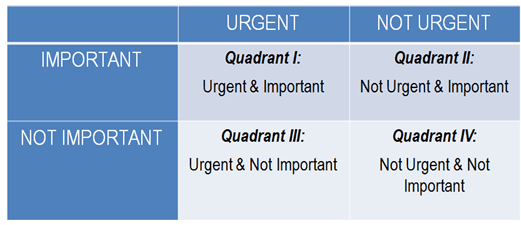
The day was an ongoing splurge of ideas and so many that I want to implement immediately. However, my goal this year is to not hit stress levels, to look after my own well-being and my whānau and make sure that I pace myself. So with all of these great ideas, Ive decided to dwindle the down into a quadrant using Stephen Covey's Time Management Quadrant. Some of these ideas I already have on my list and some of them were inspired by Jo.


Quadrant I:
  • Get to know my learners and their families
  • Identify whānau aspirations
  • Welcome sign in the door
  • Name tags
*All related to creating a sense of belonging!


Quadrant II:
  • Prepare for School Entry Assessments
  • Prepare for first round of Mutukaroa 
  • Review 'play' opportunities for students throughout the day - what areas of play am I missing?
  • Think about possible 'teacher workshops' throughout the day e.g number bingo, asking questions etc.
  • I wonder wall

Quadrant III:
  • Create math games for students
  • Source loose parts resources for class

Quadrant IV:
  • It really is hard to identify things in the 4th Quadrant. So will leave this section blank for now.

Sample of resources


Jo shared a great reading from my friend and colleague Keryn Davis, Jo highlighted the class timetable in this reading and ways that we can make it an easier transition for children and families (and teachers), such as using the first part of the morning for play-based learning.  


I had a go at drafting my Term 1 timetable (will obviously require tweaks) but I think I have a bit of a structure in place. I would love some feedback on my timetable (remember I'm new to this...) and any glaring changes that I should make.


Perhaps the most important takeaway from the day however was the link to Nathan Mikaere Wallis' work - Singing! Moving and Laughing! is the best way to get children engaged. 

My professional inquiry 2018

After reflecting on "Our codes, our standards" I have whittled my area of inquiry down for the year. My professional inquiry will be based on the Design for learning section. What immediately jumps out at me with regard to an area of focus is 'assessment'. I am moving from a sector that prioritises narrative and formative types of assessments, to a sector that has primarily based its assessments on the government requirements of National Standards - consequently an emphasis on Reading, Writing and Mathematics.
Design for learning: Design learning based on curriculum and pedagogical knowledge, assessment information and an understanding of each learner’s strengths, interests, needs, identities, languages and cultures.
Select teaching approaches, resources, and learning and assessment activities based on a thorough knowledge of curriculum content, pedagogy, progressions in learning and the learners.
My professional inquiry for the year is:


"What strategies are most effective when supporting learners with reading?" 
- Individual inquiry

Inquiry #1 - What evidence do I have that this is the right area to inquire into?
I have recently read lots of books to get my head around the assessment that is required in the first few years of school. Under the Mutukaroa framework - assessments should be completed on arrival to school (5 years), then again at 5.5 years, 6 years and 7 years. Over the holidays I delved into a few books and Youtube videos to help me prepare for these assessments in the new year. I read "An Observation survey of Early Literacy achievement" and "Effective Literacy Practice". 
I also came across suggested levels for children on the Reading Wheel. I have a lot to learn in this area! Although a quick scan of my blog will show that I have been focused on literacy for some time I am really interested in the reading progressions. I have my own philosophical views on reading, which can be found here. Over the years I've come to learn that reading has the most significant impact on student learning. Of all the things we can do for our tamariki - reading is the most important thing! What I strongly believe is that "Reading should be fun". As someone who enjoys reading ALOT! I want to foster this love of reading in children for life - not just in school. Maybe I should have been a librarian?


In my role as Mutukaroa coordinator I will be required to talk to whānau about their child's learning. While the whole area of Mutukaroa is intriguing, I really want to zone in on one particular area of learning and the impact this may have or not have on whānau engagement. How might we measure this area and what does true 'engagement' look like in the context of our school? What are our parents aspirations for their child? These are all unanswered questions that I hope to explore throughout the year. 

28 January 2018

Reflecting on the standards - 2018

Its the beginning of 2018 and Im about to start my very first class in a primary setting. I'll be taking my 22 year old early childhood hat off and putting a brand spanking new primary hat on. To say I'm excited is a bit of an understatement. I can't wait to be a rookie again!


Professional journal


It is a requirement for teachers in Aotearoa (and in my school) to keep a professional journal with evidence of growth and learning. As I have done for many years, I will be setting myself a professional inquiry based on a reflection of the very new "Our Code, Our Standards". I have grappled with various ways to show my professional growth - website, hard copy folder, Google Drive folder. I have come to the conclusion that I will keep this blog and tweak it a bit for evidence of my professional growth. You can see examples of my previous inquiries here, here, here and here.


Reflecting on the "Standards"


Te Tiriti o Waitangi partnership: Understand and recognise the unique status of tangata whenua in Aotearoa New Zealand. 

  • Understand and acknowledge the histories, heritages, languages and cultures of partners to Te Tiriti o Waitangi. 
  • Practise and develop the use of te reo and tikanga Māori. Demonstrate commitment to tangata whenuatanga and Te Tiriti o Waitangi partnership in Aotearoa New Zealand.

Reflection

I am privileged to be of Maori descent. My father is a descendant from Ngāpuhi and grew up in Kaikohe and Whangarei. I use Te Reo Maori and practice Tikanga Maori in all of my teaching practice and everyday interactions. This 'standard' is of significance to me professional and personally so I will look at further opportunities to embed this in my everyday practice.


Professional learning: Use inquiry, collaborative problem-solving and professional learning to improve professional capability to impact on the learning and achievement of all learners. 

  • Inquire into and reflect on the effectiveness of practice in an ongoing way, using evidence from a range of sources.
  • Critically examine how my own assumptions and beliefs, including cultural beliefs, impact on practice and the achievement of learners with different abilities and needs, backgrounds, genders, identities, languages and cultures. 
  • Engage in professional learning and adaptively apply this learning in practice.
  • Be informed by research and innovations related to: content disciplines; pedagogy; teaching for diverse learners, including learners with disabilities and learning support needs; and wider education matters.
  • Seek and respond to feedback from learners, colleagues and other education professionals, and engage in collaborative problem solving and learning-focused collegial discussions.

Reflection

I am addicted to learning, I am an avid reader of professional and personal books and love challenging myself to think outside the box, push boundaries and make a difference to those I teach and work with. My recent experience overseas (international teaching) was a great opportunity for me to engage with a range of people from around the world. This was a really good opportunity for me to really critique my own assumptions and beliefs about children's learning.

My recent shift from early childhood to primary education is a great example of my commitment to ongoing learning and growth. I have lots to learn with regard to 'assessment' in primary but am very much looking forward to the journey.


Professional relationships: Establish and maintain professional relationships and behaviours focused on the learning and wellbeing of each learner.

  • Engage in reciprocal, collaborative learning-focused relationships with: – learners, families and whānau – teaching colleagues, support staff and other professionals – agencies, groups and individuals in the community.
  • Communicate effectively with others.
  • Actively contribute, and work collegially, in the pursuit of improving my own and organisational practice, showing leadership, particularly in areas of responsibility.
  • Communicate clear and accurate assessment for learning and achievement information. 

Reflection

This is perhaps my strength and main area of interest. So much so, I run workshops on ways to create positive team culture for teachers in the Manukau area. I believe 'professional relationships' is vital to the success of any team, and in my experience, time invested in the culture of a team pays of two-fold. High trust, knowing your people, whats the purpose are essential for ensuring that collaboration is at an all time high.


Naku te rourou nau te rourou ka ora ai te iwi
With your basket and my basket the people will live
Again referring to co-operation and the combination of resources to get ahead. 

Learning-focused culture: Develop a culture that is focused on learning, and is characterised by respect, inclusion, empathy, collaboration and safety.

  • Develop learning-focused relationships with learners, enabling them to be active participants in the process of learning, sharing ownership and responsibility for learning. 
  • Foster trust, respect and cooperation with and among learners so that they experience an environment in which it is safe to take risks.
  • Demonstrate high expectations for the learning outcomes of all learners, including for those learners with disabilities or learning support needs.
  • Manage the learning setting to ensure access to learning for all and to maximise learners’ physical, social, cultural and emotional safety. 
  • Create an environment where learners can be confident in their identities, languages, cultures and abilities.
  • Develop an environment where the diversity and uniqueness of all learners are accepted and valued.Meet relevant regulatory, statutory and professional requirements.

Reflection

My career in education was born at the same time as Te Whariki (Ministry of Education, 1996). I have been privileged to work with a curriculum that values holistic development. Again, I have enjoyed the work in an International Baccalaureate where the Learner Profile underpins the curriculum. As I move into the primary sector, I am looking forward to using the Key Competencies to drive the learning that happens in my classroom. 

I am particularly interested this year in exploring the Kinetic Scale and Executive Function with my 5-6 year olds.


Design for learning: Design learning based on curriculum and pedagogical knowledge, assessment information and an understanding of each learner’s strengths, interests, needs, identities, languages and cultures.

  • Select teaching approaches, resources, and learning and assessment activities based on a thorough knowledge of curriculum content, pedagogy, progressions in learning and the learners.
  • Gather, analyse and use appropriate assessment information, identifying progress and needs of learners to design clear next steps in learning and to identify additional supports or adaptations that may be required.
  • Design and plan culturally responsive, evidence-based approaches that reflect the local community and Te Tiriti o Waitangi partnership in New Zealand. 
  • Harness the rich capital that learners bring by providing culturally responsive and engaging contexts for learners. 
  • Design learning that is informed by national policies and priorities.

Reflection

This is perhaps my biggest challenge and area of opportunity, I am definitely in need of digging deeper into assessment in primary e.g. BUT, JAM, CAP, LID - what do these all mean? As I am the Mutukaroa coordinator at my new school, it is essential that I get my head around assessment in the primary setting. 


Teaching: Teach and respond to learners in a knowledgeable and adaptive way to progress their learning at an appropriate depth and pace. 


  • Teach in ways that ensure all learners are making sufficient progress, and monitor the extent and pace of learning, focusing on equity and excellence for all. 
  • Specifically support the educational aspirations for Māori learners, taking shared responsibility for these learners to achieve educational success as Māori. 
  • Use an increasing repertoire of teaching strategies, approaches, learning activities, technologies and assessment for learning strategies and modify these in response to the needs of individuals and groups of learners.
  • Provide opportunities and support for learners to engage with, practise and apply learning to different contexts and make connections with prior learning.
  • Teach in ways that enable learners to learn from one another, to collaborate, to self-regulate and to develop agency over their learning.
  • Ensure learners receive ongoing feedback and assessment information and support them to use this information to guide further learning.

Reflection

I am very keen to bring play-based learning to my new setting and perhaps emphasise some of the soft skills that are required for life in general and not just reading, writing and math. There is an opportunity here with National Standards no longer in effect to ensure that arts, music, social competence are present in our children's lives.